12:39 | 25.02.26 | Interviews | exclusive 9377
Lars Vestergaard: From Local Innovation to Global Positioning


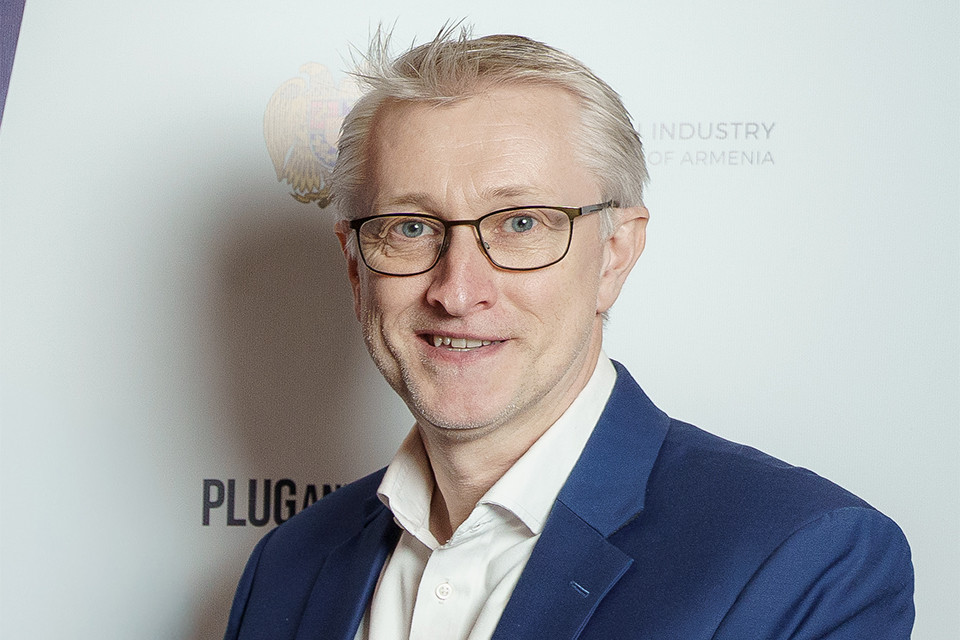
Lars Vestergaard, startup advisor and Fundraising Lead at Pangea Summit in Copenhagen, has been working with Armenian startups founders. He’s actively involved in mentoring within the Plug and Play platform, he has closely observed the evolution of Armenia’s tech ecosystem from perception challenges to growing international recognition.
In an interview with iTel.am, Lars Vestergaard shares his perspective on Armenia’s potential, the importance of international partnerships, and the mindset early-stage founders must develop to succeed globally.
- How do you feel about being in Armenia and working with the local startup ecosystem?
-What really shines through here is that from the highest levels down everyone takes the mission seriously, but in a very positive and human way. There is a genuine sense that people know what they are here to achieve.
What strikes me most is how quickly relationships become personal. Even if you haven’t met someone many times before, you very quickly establish a strong working relationship built on trust and confidence. There’s also a genuine interest in receiving guidance and support. People are open to help. That openness makes a big difference.
When the mission is clear and you’re surrounded by people who truly want to achieve something, presenting them with possibilities becomes meaningful. I love seeing how open Armenian founders are to suggestions. There is real dialogue and then, importantly, there is action.
- How would you describe the current state of Armenia’s tech ecosystem to someone considering investing here?
-I would say it’s underrated, particularly in terms of its technological potential.
It may not be perceived as a large market, because when people look at Armenia purely from a domestic market perspective, they see a small country. But that’s not the right lens. The real question is whether “export from Armenia” can become a genuine stamp of approval a mark of quality.
And from what I’ve seen, Armenian startups have embraced one of the principles I constantly emphasize: do not over-promise, but over-deliver. I’ve genuinely seen that mentality come to life here. That’s powerful.
- Many Armenian startups aim for international expansion. What challenges do they face?
-A lot of startups here have ambitious international expansion plans, which is excellent. But I also tell them something they may not always want to hear: when you enter a European or Asian market, you might not get the reception you expect.
That’s why I consistently stress the importance of strong international partners. If you are a small nation entering a large foreign market, you need local partners who understand that ecosystem.
It’s not enough to secure foreign venture capital and assume that an investor will elegantly introduce you to the market. You need partners who can support distribution, go-to-market strategy, and local positioning.
If I were to summarize my advice: find partners, work together, and consistently over-deliver. If you do that, the world will eventually recognize the quality coming out of Armenia.
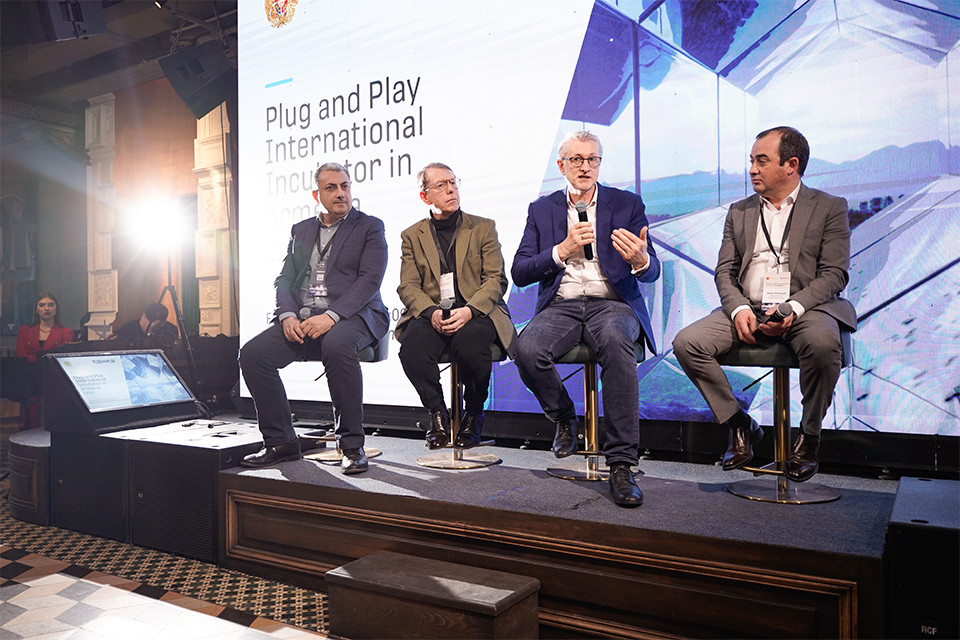
- What role does Plug and Play Tech Center play here, how it supports Armenian founders?
-I may be biased, but I absolutely admire what Plug and Play is doing. I’ve seen them deliver real results.
One of their core strengths is exactly what I mentioned earlier: under-promise and over-deliver. They approach the ecosystem with seriousness and commitment. The fact that discussions are ongoing about repeating and expanding their engagement shows that their impact is recognized at the ministerial level.

They provide a platform that allows international mentors like myself to contribute meaningfully. The way it all ties together government, startups, mentors, global network works very well.
- As a startup advisor, what are the most common mistakes early-stage founders make?
-A big part of my work is helping founders “own the room.” Whether it’s the CEO, the founder, or the developer, they must take charge.
Even if you don’t have an MVP yet, don’t present yourself as an excuse. Don’t apologize for being early stage. We literally work on voice, posture, the raised chin, and how you carry yourself. I try to build them up as individuals from the very beginning.
Another major mistake is failing to clearly communicate value. Many founders don’t instinctively think in terms of value proposition. They need to show whether they are better, faster, or cheaper, but more importantly, they need to show that they understand the customer’s pain. In the eyes of the customer, if they prove they understand the customer pain, they have a solution to solve it.
My advice is simple: Try to be bold, realistic but bold around what you are setting out to achieve and then work around achieving that.
Nune Grigoryan talked to Lars Vestergaard